How Rovers Get to Mars
Getting a rover to Mars is a huge challenge that takes careful planning and about seven months of travel through space. The rover is folded up inside a spacecraft and launched from Earth on a powerful rocket. As the spacecraft approaches Mars, it enters the thin Martian atmosphere at speeds of about 20,000 kilometers per hour (12,000 miles per hour). A heat shield, parachute, and retro-rockets work together to slow the spacecraft down for a safe landing. NASA engineers call the final minutes of landing “seven minutes of terror” because so many things must go perfectly, and the spacecraft is too far away for real-time control from Earth.
Sojourner: The First Mars Rover
Sojourner was the first rover to successfully drive on Mars, landing on July 4, 1997, as part of the Mars Pathfinder mission. It was small — about the size of a microwave oven — and weighed only 11.5 kilograms (25 pounds). During its 83 days of operation, Sojourner traveled about 100 meters (330 feet) and studied the chemical makeup of Martian rocks and soil. The little rover proved that it was possible to drive a remote-controlled vehicle on another planet. Sojourner’s success paved the way for all the larger, more advanced rovers that followed.
Spirit and Opportunity
NASA’s twin rovers, Spirit and Opportunity, landed on opposite sides of Mars in January 2004. Each rover was about the size of a golf cart and was designed to last only 90 days, but both far exceeded expectations. Spirit explored for over six years before getting stuck in soft soil in 2010, while Opportunity kept going for 15 years until a massive dust storm blocked its solar panels in 2018. Opportunity holds the record for the longest distance driven on another planet, traveling over 45 kilometers (28 miles). Together, the twin rovers discovered strong evidence that liquid water once existed on the surface of Mars.
Curiosity: A Rolling Laboratory
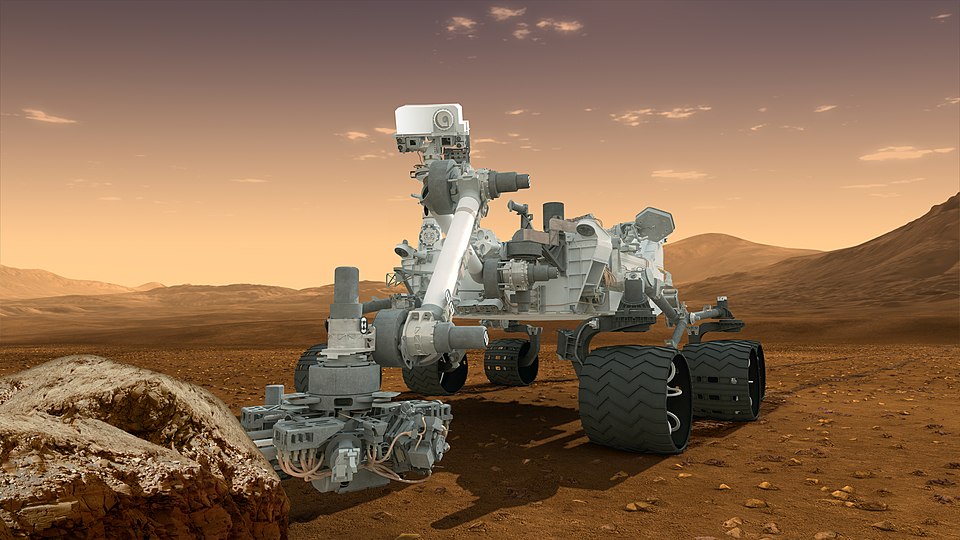
Curiosity is a car-sized rover that landed in Mars’s Gale Crater on August 6, 2012, and is still operating today. Unlike earlier rovers that used solar panels, Curiosity is powered by a plutonium-based nuclear generator that lets it work day and night, even during dust storms. The rover carries 17 cameras and a laser that can vaporize rocks from a distance so it can analyze what they are made of. One of Curiosity’s biggest discoveries was finding organic molecules and evidence that Gale Crater was once a lake that could have supported microbial life. Curiosity has climbed the slopes of Mount Sharp, a mountain inside the crater, studying layers of rock that reveal billions of years of Martian history.
Perseverance and Ingenuity
Perseverance, NASA’s newest and most advanced rover, landed in Jezero Crater on February 18, 2021. Its main mission is to search for signs of ancient microbial life and collect rock samples that will eventually be returned to Earth by a future mission. Perseverance also carried a small helicopter called Ingenuity, which became the first aircraft to achieve powered flight on another planet on April 19, 2021. Ingenuity was designed for just five test flights but completed 72 flights before its mission ended in January 2024. Perseverance also carries an experiment called MOXIE that successfully produced oxygen from the carbon dioxide in Mars’s atmosphere.
What Rovers Have Discovered
Mars rovers have transformed our understanding of the Red Planet by making discoveries that would have been impossible from orbit alone. They have found minerals that only form in the presence of water, proving that Mars was once a much warmer and wetter place. Curiosity detected methane gas in the Martian atmosphere, which is interesting because on Earth methane is often produced by living organisms. Rovers have also studied Martian weather patterns, measured radiation levels, and photographed landscapes including ancient riverbeds and layered rock formations. These discoveries help scientists determine whether Mars could have once supported life and whether humans might one day live there.
The Future of Mars Exploration
The rock samples being collected by Perseverance are part of an ambitious plan called Mars Sample Return, which aims to bring pieces of Mars back to Earth for detailed study in laboratories. China’s Zhurong rover, which landed in 2021, is also exploring a different region of Mars and adding to our knowledge. Future rovers may be designed to explore caves or dig deep underground where signs of life might be better preserved. Scientists are also working on technology that would allow rovers to communicate with astronauts who may one day walk on Mars. Every rover mission brings us one step closer to answering the biggest question of all — was there ever life on Mars?
 OtterKnow Kids Encyclopedia