The First Satellites and Animals in Space
The Space Age officially began on October 4, 1957, when the Soviet Union launched Sputnik 1, the first artificial satellite to orbit Earth. Sputnik was only about the size of a beach ball, but it changed the world forever. Before sending humans into space, scientists sent animals to test whether living creatures could survive the journey. A dog named Laika became the first animal to orbit Earth in 1957, and later missions sent monkeys and chimpanzees. These brave animal travelers helped scientists learn how space travel affected living bodies.
The First Humans in Space
On April 12, 1961, Soviet cosmonaut Yuri Gagarin became the first human to travel into space, completing one full orbit around Earth in his Vostok 1 spacecraft. Just a few weeks later, American astronaut Alan Shepard made a shorter suborbital flight aboard Freedom 7. These first crewed missions proved that humans could survive in the weightless environment of space. In 1963, Soviet cosmonaut Valentina Tereshkova became the first woman in space. Each mission taught scientists more about how to keep astronauts safe during spaceflight.
Walking on the Moon
On July 20, 1969, American astronauts Neil Armstrong and Buzz Aldrin became the first humans to walk on the Moon during the Apollo 11 mission. Armstrong famously said, “That’s one small step for man, one giant leap for mankind,” as he stepped onto the lunar surface. Between 1969 and 1972, a total of twelve astronauts walked on the Moon across six Apollo missions. They collected Moon rocks, set up scientific experiments, and took photographs that helped scientists understand the Moon’s history. The Apollo program remains one of humanity’s greatest achievements.
Space Stations and Living in Space
After the Moon missions, scientists focused on learning how to live and work in space for longer periods. The Soviet Union launched the first space station, Salyut 1, in 1971, and later built the Mir station, which operated for fifteen years. The United States launched Skylab in 1973. In 1998, sixteen countries worked together to begin building the International Space Station (ISS), which orbits about 250 miles above Earth. Astronauts have lived aboard the ISS continuously since November 2000, conducting thousands of scientific experiments in the unique environment of microgravity.
Space Shuttles and Reusable Spacecraft
NASA’s Space Shuttle program, which ran from 1981 to 2011, introduced the first reusable spacecraft. The shuttles launched like rockets but landed like airplanes, and they completed 135 missions over thirty years. Space shuttles carried astronauts, launched satellites, and helped build the International Space Station. The program also experienced two tragic accidents — the Challenger disaster in 1986 and the Columbia disaster in 2003 — which led to important safety improvements. Today, companies like SpaceX have developed new reusable rockets that can land themselves after launch.
Robotic Explorers and Rovers
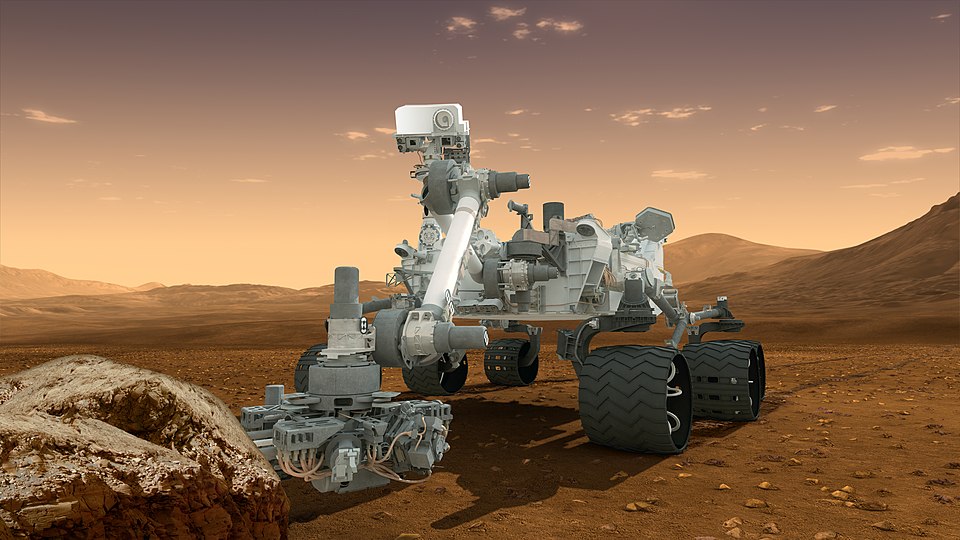
While astronauts explored nearby space, robotic spacecraft ventured much farther into the solar system. NASA’s Voyager 1 and Voyager 2 probes, launched in 1977, flew past Jupiter, Saturn, Uranus, and Neptune, sending back detailed photographs. Voyager 1 has now traveled beyond our solar system and into interstellar space, making it the farthest human-made object from Earth. On Mars, rovers like Spirit, Opportunity, Curiosity, and Perseverance have explored the planet’s surface, searching for signs of ancient water and life. These robotic explorers help scientists study places that are too dangerous or far away for human travelers.
The Future of Space Exploration
Space exploration continues to advance with exciting new goals. NASA’s Artemis program aims to return astronauts to the Moon, including the first woman and first person of color to walk on the lunar surface. Scientists and engineers are also working on plans to send humans to Mars, which would be the farthest journey people have ever taken. Private companies like SpaceX and Blue Origin are developing new technologies to make space travel faster and more affordable. The James Webb Space Telescope, launched in 2021, is already helping scientists discover distant galaxies and learn more about the universe than ever before.
 OtterKnow Kids Encyclopedia