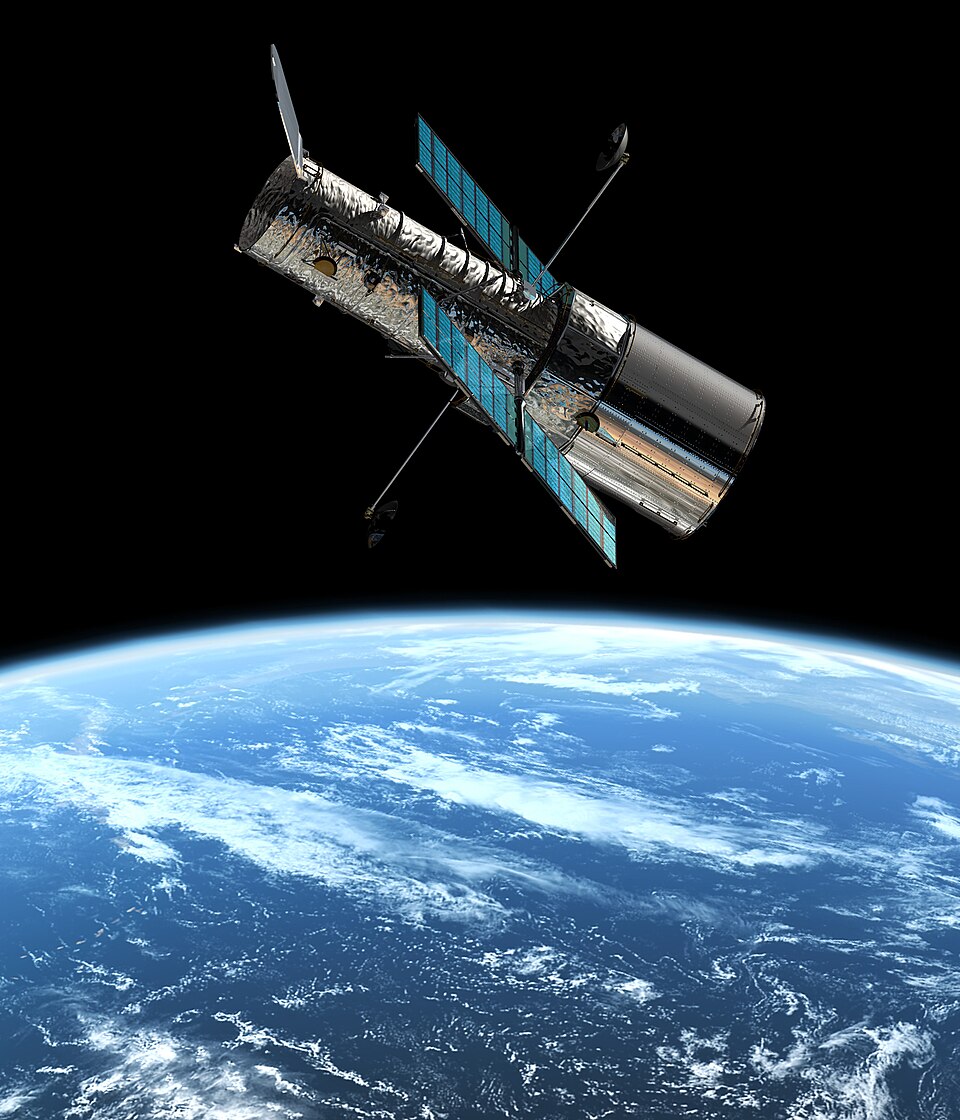
How Hubble Works
Hubble works by collecting light from distant stars, galaxies, and nebulae using a large mirror that is about 7.9 feet across. Light bounces off this primary mirror onto a smaller secondary mirror, which then directs it to scientific instruments that record the image. Because Hubble is above Earth’s atmosphere, it can see objects much more clearly than most telescopes on the ground. The telescope can detect not only visible light but also ultraviolet and infrared light, which are invisible to human eyes. Hubble sends its images and data back to Earth using radio signals, where scientists download and study them.
The Famous Mirror Problem
When Hubble first started sending back images in 1990, scientists were shocked to discover that the pictures were blurry. Engineers found that the primary mirror had been ground to the wrong shape by a tiny amount, just 2.2 microns, which is about one-fiftieth the thickness of a human hair. In December 1993, astronauts aboard the Space Shuttle Endeavour flew to Hubble and installed corrective optics called COSTAR, which worked like a pair of glasses for the telescope. The repair mission was a huge success, and Hubble began producing the crystal-clear images it is famous for. This fix is considered one of the greatest achievements in the history of space engineering.
Key Discoveries
Hubble has made many groundbreaking discoveries that changed what scientists know about the universe. It helped astronomers determine that the universe is approximately 13.8 billion years old by measuring the distances to faraway galaxies. Hubble also revealed that the expansion of the universe is speeding up, a surprising finding that led to the discovery of a mysterious force called dark energy. The telescope has photographed galaxies that existed when the universe was very young, giving scientists a window into the distant past. Hubble has also found evidence of supermassive black holes at the centers of most galaxies.
Iconic Images
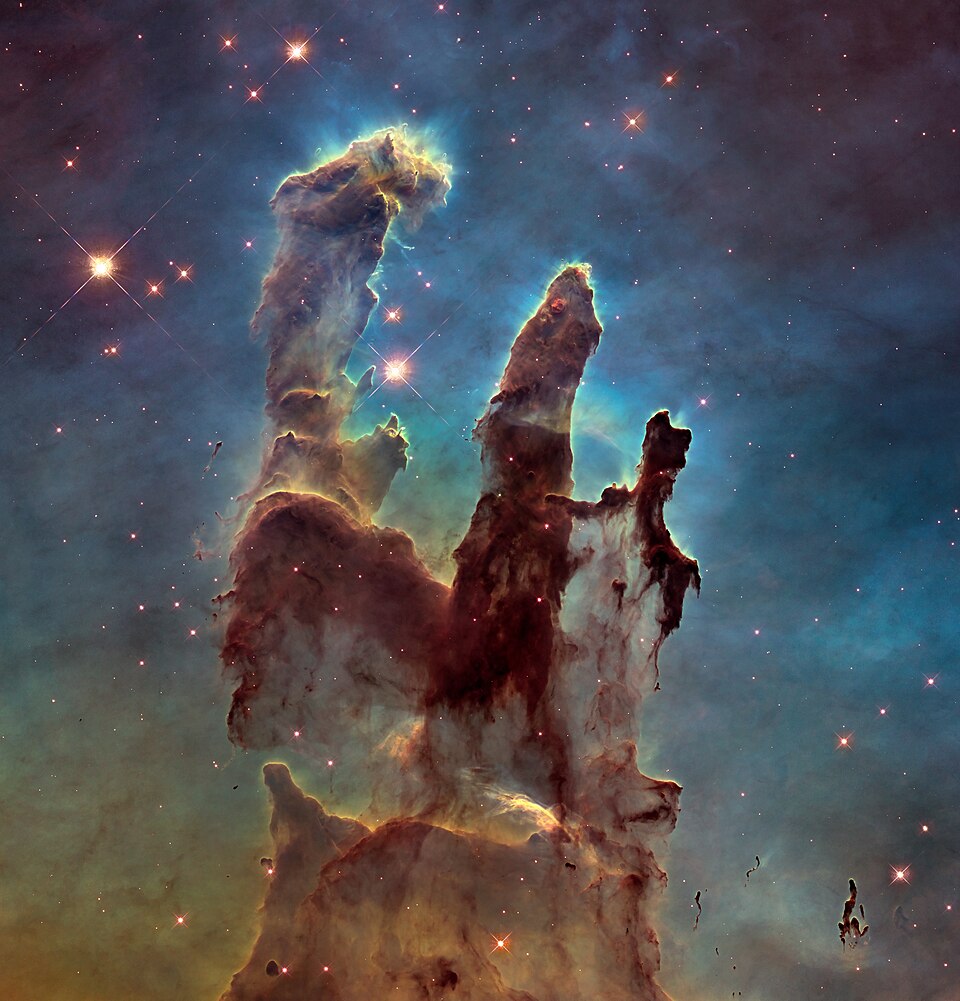
Some of the most famous space photographs ever taken came from Hubble. The “Pillars of Creation” image, taken in 1995, shows towering columns of gas and dust in the Eagle Nebula where new stars are being born. The Hubble Deep Field images revealed thousands of galaxies in a tiny patch of sky that appeared almost empty to the naked eye. Hubble has captured vivid views of colorful nebulae, colliding galaxies, and the surfaces of planets in our own solar system. These images have inspired millions of people around the world and made space science more exciting and accessible to everyone.
Servicing Missions
One of the special things about Hubble is that astronauts could visit it in space to make repairs and upgrades. Five servicing missions were carried out between 1993 and 2009, each one improving the telescope’s capabilities. During these missions, astronauts performed complex spacewalks to replace cameras, install new instruments, and fix broken equipment. The final servicing mission in May 2009 added two new instruments and replaced critical components, extending Hubble’s life by many years. No other space telescope has ever been repaired and upgraded by astronauts in orbit.
Hubble’s Legacy
After more than three decades in space, Hubble remains one of the most productive scientific instruments ever built. It has made over 1.5 million observations and contributed to more than 19,000 scientific papers. Hubble’s discoveries have earned multiple scientists the Nobel Prize, including the 2011 Nobel Prize in Physics for the discovery of the accelerating expansion of the universe. The telescope continues to operate alongside the newer James Webb Space Telescope, which launched in 2021. Together, these two telescopes give scientists powerful tools to study the universe in different kinds of light.
Why Hubble Matters
Hubble has shown us that the universe is far bigger, older, and more complex than anyone imagined. Its photographs have brought the beauty of space into classrooms, museums, and homes around the world. By proving that telescopes in space can work incredibly well, Hubble paved the way for future space observatories. The telescope has inspired countless young people to become interested in science, astronomy, and space exploration. Even after more than 35 years, Hubble continues to make new discoveries and remind us how much there is still left to learn about the universe.
 OtterKnow Kids Encyclopedia