How It Was Built
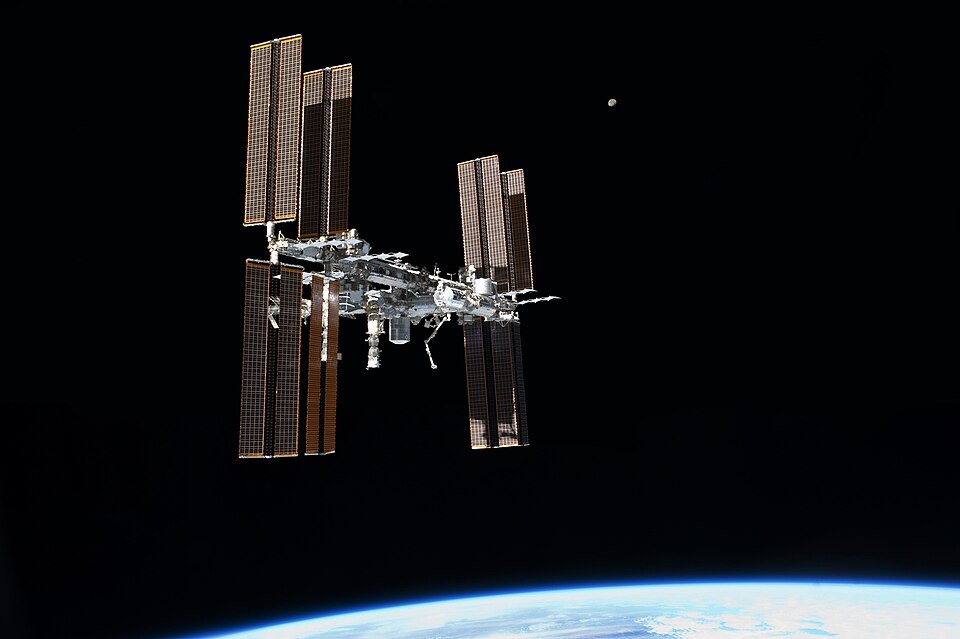
Building the ISS was one of the most complicated construction projects in history. The station was assembled piece by piece in space over more than a decade, with the first module launched in 1998. Astronauts on Space Shuttle missions and Russian rockets carried the parts into orbit and connected them during spacewalks. More than 40 assembly missions were needed to put the station together. Five different space agencies from 15 countries worked together on the project, including NASA from the United States, Roscosmos from Russia, ESA from Europe, JAXA from Japan, and CSA from Canada.
Living in Space
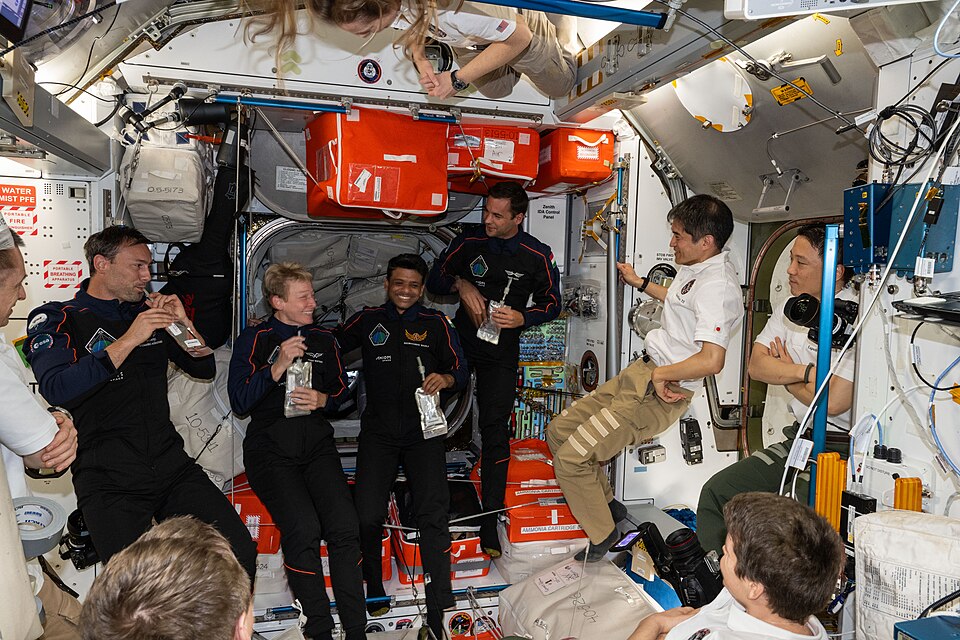
Life on the ISS is very different from life on Earth because there is almost no gravity. Astronauts float through the station instead of walking, and they have to strap themselves into sleeping bags attached to the walls so they do not drift away while sleeping. Food comes in special packages, and astronauts eat with forks and spoons but must be careful that crumbs do not float into equipment. Water is very precious on the station, so the ISS recycles almost all water, including moisture from the air and even the crew’s sweat and urine. Astronauts exercise for about two hours every day using special machines to keep their muscles and bones strong in the weightless environment.
Science on the ISS
The ISS is one of the most important science laboratories in the world. Scientists use the microgravity environment to conduct experiments that would be impossible on Earth, studying how crystals grow, how fire behaves, and how the human body changes in space. Medical research on the ISS has helped scientists understand diseases like osteoporosis and muscle loss, which could lead to better treatments for people on Earth. Astronauts also grow plants in space to learn how food might be produced on long missions to Mars. More than 3,000 scientific experiments have been conducted on the ISS since it began operating.
Spacewalks and Repairs
Sometimes astronauts need to go outside the ISS to make repairs or install new equipment, and these trips are called spacewalks or EVAs (Extra-Vehicular Activities). A spacewalk can last between five and eight hours, and astronauts wear special spacesuits that protect them from extreme temperatures, radiation, and the vacuum of space. Outside the station, temperatures can range from minus 250 degrees Fahrenheit in the shade to 250 degrees Fahrenheit in direct sunlight. More than 260 spacewalks have been performed at the ISS since construction began. Astronauts train for months underwater in a huge pool called the Neutral Buoyancy Laboratory to prepare for these challenging tasks.
How Supplies Get There
The ISS needs regular deliveries of food, water, equipment, and scientific experiments. Several types of cargo spacecraft visit the station, including SpaceX Dragon capsules, Northrop Grumman Cygnus vehicles, and Russian Progress ships. Crew members travel to and from the station aboard SpaceX Crew Dragon capsules and Russian Soyuz spacecraft. A cargo ship typically takes one to two days to reach the station after launching from Earth. When cargo ships are done, some burn up safely in Earth’s atmosphere, while others, like the SpaceX Dragon, return to Earth carrying completed experiments and equipment.
International Cooperation
The ISS is one of the greatest examples of countries working together peacefully in history. Fifteen countries contributed to building and operating the station, bringing together different languages, cultures, and areas of expertise. American and Russian astronauts have lived and worked side by side on the station for more than two decades. Crew members typically stay on the ISS for about six months, and the station usually has six or seven people on board at a time. More than 270 people from 21 different countries have visited the ISS since it opened.
The Future of the ISS
NASA and its partners plan to continue using the ISS until around 2030, after which the station will be safely deorbited and replaced by new space stations. Private companies like Axiom Space are already building modules that will eventually become independent commercial space stations. The lessons learned from the ISS are helping NASA plan for future missions to the Moon and Mars, where astronauts will need to live in space for even longer periods. China has launched its own space station called Tiangong, showing that more nations are interested in having a permanent presence in orbit. The ISS has shown the world that living and working in space is not just a dream but a reality.
 OtterKnow Kids Encyclopedia