Why the Moon Turns Red
During a total lunar eclipse, the Moon does not go completely dark. Instead, it often turns a deep reddish or coppery color, which is why people sometimes call it a “Blood Moon.” This happens because Earth’s atmosphere bends some sunlight around the edges of our planet and onto the Moon. The atmosphere filters out most of the blue light and lets the red and orange light pass through, much like how sunsets look red and orange. The exact color depends on how much dust and clouds are in Earth’s atmosphere at the time.
Earth’s Two Shadows
The Earth actually casts two different shadows into space: the umbra and the penumbra. The umbra is the darker, inner shadow where sunlight is completely blocked. The penumbra is a lighter, outer shadow where only part of the sunlight is blocked. When the Moon passes through the penumbra, it dims only slightly, and the change is hard to notice. When the Moon enters the darker umbra, that is when the dramatic color change and darkening happen.
Types of Lunar Eclipses
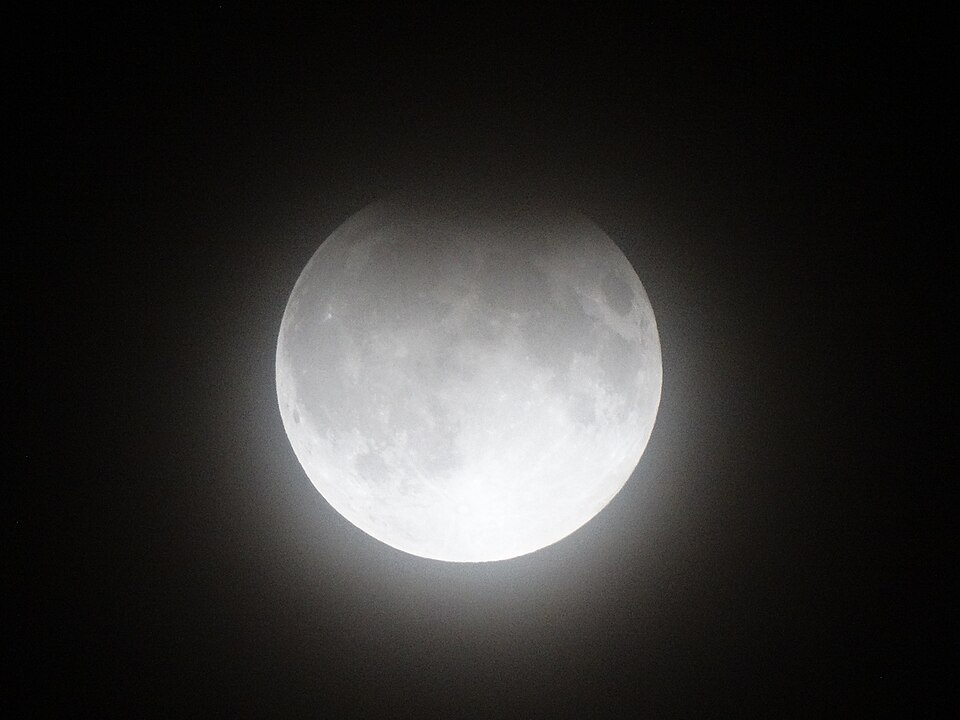
There are three types of lunar eclipses: total, partial, and penumbral. A total lunar eclipse occurs when the entire Moon passes through Earth’s umbra, turning it red or copper-colored. A partial lunar eclipse happens when only part of the Moon enters the umbra, so you can see a dark bite taken out of the Moon. A penumbral lunar eclipse occurs when the Moon passes through only the penumbra, causing a very subtle dimming that most people do not even notice. Total lunar eclipses are the most spectacular and exciting to watch.
How Often Do Lunar Eclipses Happen?
Lunar eclipses do not happen every month, even though there is a full Moon every month. This is because the Moon’s orbit around Earth is tilted about 5 degrees compared to Earth’s orbit around the Sun. Most months, the Moon passes slightly above or below Earth’s shadow and no eclipse occurs. On average, there are about two to three lunar eclipses each year, but not all of them are total eclipses. From any single location on Earth, a total lunar eclipse is visible roughly once every two and a half years.
Watching a Lunar Eclipse
One of the best things about lunar eclipses is that they are easy to observe. You do not need a telescope, special glasses, or any equipment at all. Anyone on the night side of Earth can see the eclipse, and it looks the same no matter where you are standing. A total lunar eclipse can last up to about 1 hour and 45 minutes, so there is plenty of time to enjoy it. Binoculars or a small telescope can make the view even more impressive by showing details and color changes on the Moon’s surface.
Lunar Eclipses in History
People have been fascinated by lunar eclipses for thousands of years. Ancient civilizations often saw eclipses as mysterious or frightening events, and many cultures created myths and legends to explain them. The ancient Greek philosopher Aristotle used the curved shape of Earth’s shadow on the Moon during an eclipse as evidence that the Earth is round. Christopher Columbus famously used his knowledge of an upcoming lunar eclipse in 1504 to convince Indigenous people in Jamaica to provide him with supplies. Today, scientists use lunar eclipses to study Earth’s atmosphere and to precisely measure the Moon’s orbit.
Upcoming Eclipses and How to Prepare
Scientists can predict exactly when and where lunar eclipses will occur, sometimes hundreds of years in advance. NASA and other space agencies publish eclipse calendars so people can plan ahead. To enjoy a lunar eclipse, find a spot with a clear view of the sky, away from bright city lights if possible. Dress warmly if it is cold outside, since you may be watching for a couple of hours. Bring a blanket, some snacks, and maybe a pair of binoculars, and enjoy one of the best shows the night sky has to offer.
 OtterKnow Kids Encyclopedia