Why the Distance Changes
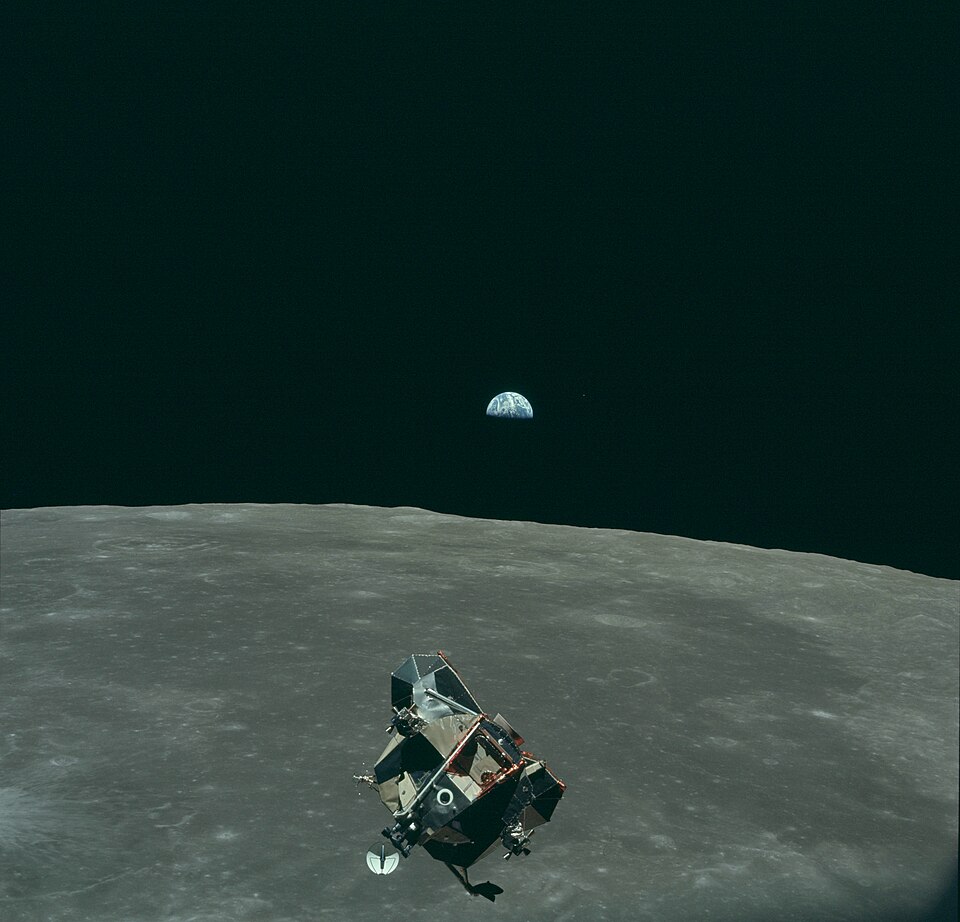
The Moon does not travel around Earth in a perfect circle. Instead, it follows an oval-shaped path called an ellipse. At its closest point, called perigee, the Moon is about 225,623 miles (363,104 kilometers) away. At its farthest point, called apogee, it is about 252,088 miles (405,696 kilometers) away. This means the distance between Earth and the Moon is always changing slightly as the Moon orbits.
Measuring the Distance
Scientists have found clever ways to measure how far away the Moon is. One of the most accurate methods uses laser beams aimed at special mirrors left on the Moon’s surface by Apollo astronauts. The laser light bounces off the mirrors and returns to Earth, and scientists measure how long the round trip takes. Since light travels at about 186,000 miles per second, the laser beam reaches the Moon and comes back in roughly 2.5 seconds.
Long before lasers or space travel, ancient astronomers tried to measure the distance to the Moon. Around 150 BCE, the Greek astronomer Hipparchus used geometry and observations of lunar eclipses to estimate the Moon’s distance. His calculations were remarkably close to the actual value we know today. Later, in the 1700s and 1800s, astronomers used a technique called parallax, observing the Moon from two different locations on Earth to calculate its distance.
Traveling to the Moon
The Apollo missions of the 1960s and 1970s were the first to send humans to the Moon. The Apollo 11 spacecraft took about 3 days to travel from Earth to the Moon in 1969. Modern spacecraft can make the trip faster or slower depending on their mission and the route they take. The fastest spacecraft ever sent toward the Moon, the New Horizons probe, passed the Moon’s orbit in just about 8 hours and 35 minutes on its way to Pluto.
The Moon Is Moving Away
Here is a surprising fact: the Moon is slowly drifting farther from Earth. Each year, the Moon moves about 1.5 inches (3.8 centimeters) farther away. This happens because of the gravitational interaction between Earth and the Moon, which transfers energy from Earth’s rotation to the Moon’s orbit. Billions of years ago, the Moon was much closer to Earth and appeared much larger in the sky. In the distant future, the Moon will be even farther away than it is today.
Why the Distance Matters
Knowing the exact distance to the Moon is important for space exploration. Scientists and engineers need precise measurements to plan spacecraft trajectories and ensure safe landings. The distance also affects ocean tides on Earth, since the Moon’s gravity pulls on our oceans. When the Moon is closer during perigee, tides can be slightly higher than usual. Understanding this distance helps us learn more about how the Earth-Moon system works together.
Fun Comparisons
To help picture how far away the Moon is, think about some comparisons. The distance to the Moon is about 10 times the distance around Earth’s equator. If you stacked pennies from Earth to the Moon, you would need more than 19 trillion pennies. The International Space Station orbits Earth at about 250 miles above the surface, so the Moon is roughly 1,000 times farther away than the space station. These comparisons help us understand just how vast even the nearby reaches of space really are.
 OtterKnow Kids Encyclopedia