The Apollo Program
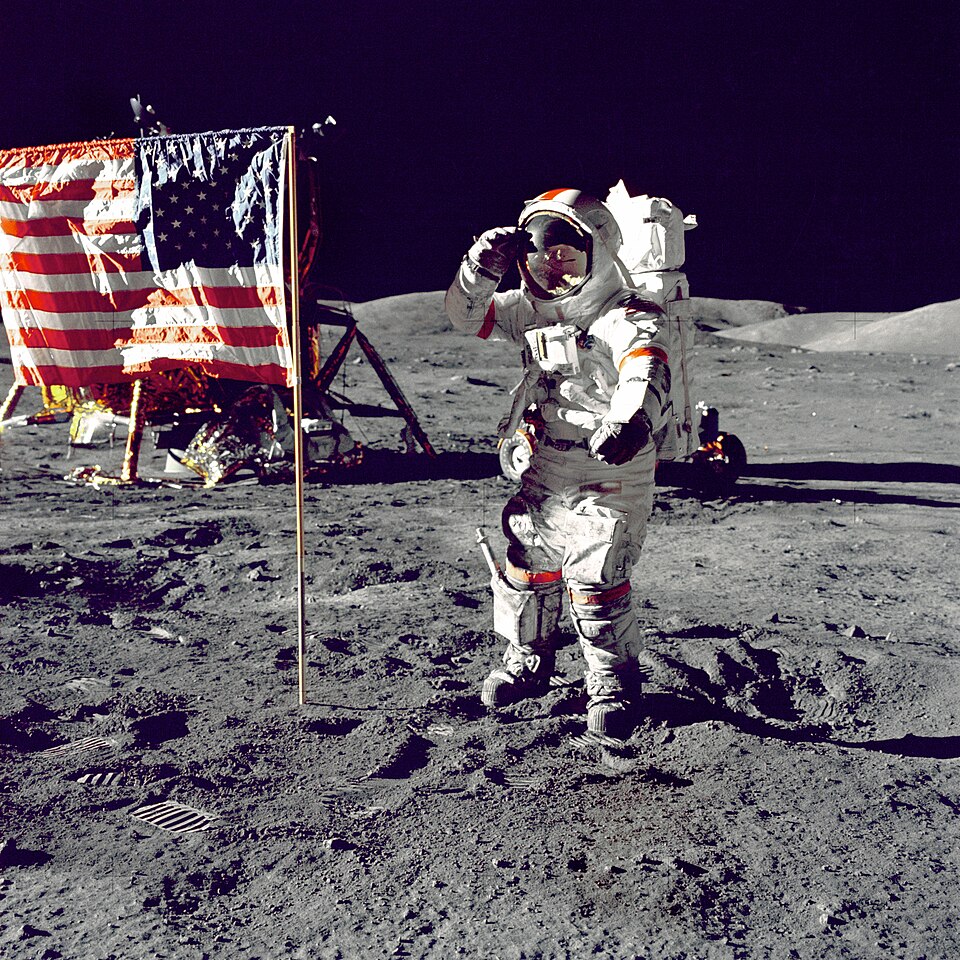
NASA’s Apollo program was created with the goal of landing humans on the Moon and bringing them safely back to Earth. President John F. Kennedy announced this goal in 1961, and thousands of scientists and engineers worked together to make it happen. Between 1969 and 1972, six Apollo missions successfully landed on the Moon. A total of 12 astronauts walked on the lunar surface during these missions. Apollo 13 had to turn back because of an explosion on the spacecraft, but the crew returned home safely.
What It Feels Like to Walk on the Moon
Walking on the Moon feels very different from walking on Earth because the Moon’s gravity is only about one-sixth as strong. This means an astronaut who weighs 180 pounds on Earth would feel like they weigh only 30 pounds on the Moon. Astronauts found that hopping and bouncing was easier than regular walking on the lunar surface. The ground is covered in a fine, powdery dust called regolith that stuck to everything, including spacesuits and boots. Astronauts described the dust as smelling like burnt gunpowder when they returned to the lunar module.
Spacesuits for the Moon
Astronauts needed special spacesuits to survive on the Moon because there is no air to breathe and no protection from the Sun’s harmful rays. These suits weighed about 180 pounds on Earth but felt much lighter on the Moon thanks to the lower gravity. Each suit had its own oxygen supply, temperature controls, and a communication system built into the helmet. The suits were pressurized to keep astronauts safe in the vacuum of space. Putting on a spacesuit took about 45 minutes because every seal and connection had to be checked carefully.
What Astronauts Did on the Moon
Moonwalkers did not just take a stroll — they had important scientific work to do during their time on the surface. They collected about 842 pounds of Moon rocks and soil samples to bring back to Earth for study. Astronauts set up scientific instruments to measure moonquakes, solar wind, and the distance between the Earth and Moon. During later Apollo missions, astronauts even drove a battery-powered car called the Lunar Roving Vehicle to explore farther from the landing site. They also took hundreds of photographs to document the lunar landscape.
Challenges of Being on the Moon
The Moon has no atmosphere, which means there is no weather, no wind, and no sound travels through the air. Temperatures on the Moon swing wildly, from about 260 degrees Fahrenheit in sunlight to minus 280 degrees Fahrenheit in shadow. Without an atmosphere, tiny meteorites constantly hit the surface, and dangerous radiation from the Sun reaches the ground. Astronauts had to be very careful not to tear their spacesuits, because even a small rip could be deadly. Communication with Earth had a delay of about 1.3 seconds each way because of the distance radio signals had to travel.
Because the Moon has no wind, rain, or flowing water, the footprints left by astronauts are still there today, more than 50 years later. The boot prints are pressed into the fine lunar dust and could remain visible for millions of years. Astronauts also left behind flags, scientific instruments, and parts of their lunar modules on the surface. The Apollo 11 crew placed a plaque on the Moon that reads, “We came in peace for all mankind.” These artifacts are now considered important historical sites that people hope to preserve.
The Future of Moonwalking
NASA’s Artemis program plans to send astronauts back to the Moon, with the goal of landing the first woman and first person of color on the lunar surface. The new missions will explore the Moon’s south pole, where scientists believe there may be water ice hidden in permanently shadowed craters. Future moonwalkers will use more advanced spacesuits that allow greater movement and longer time outside. Space agencies from other countries, including China and the European Space Agency, also have plans for crewed Moon missions. These future visits could help establish a long-term base where astronauts live and work on the Moon for weeks at a time.
 OtterKnow Kids Encyclopedia