A Fish Unlike Any Other
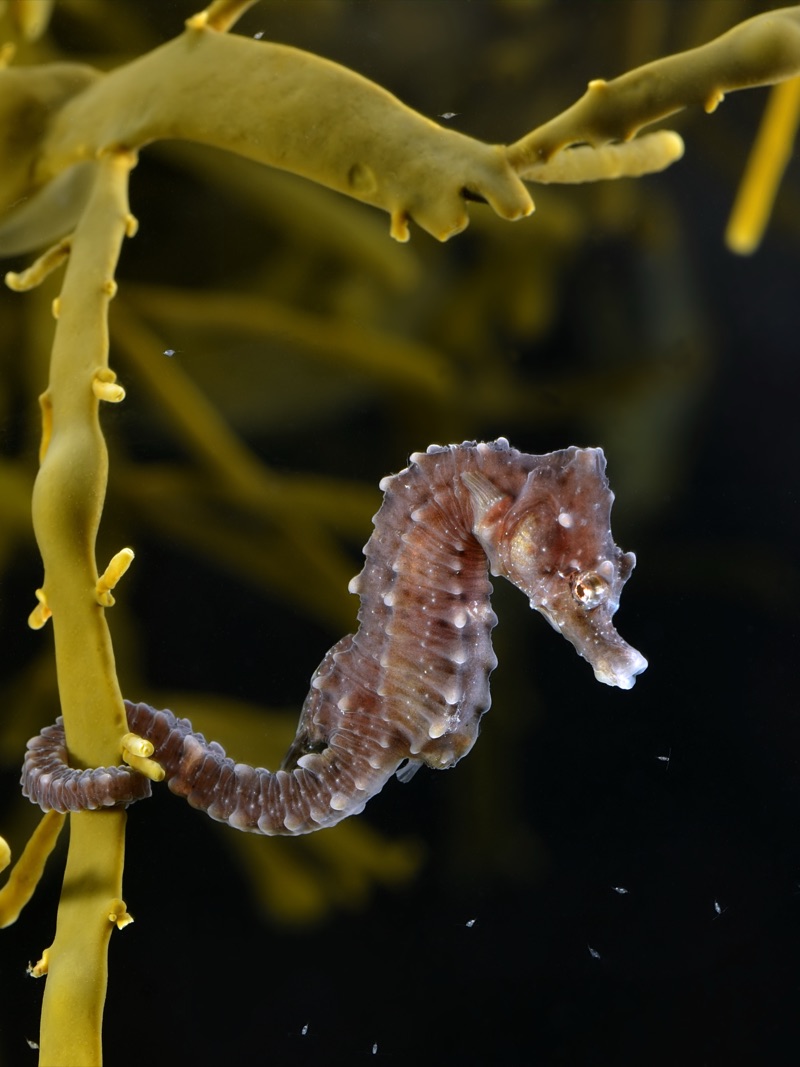
At first glance, a seahorse looks nothing like a typical fish, but it shares all the features that define one. Seahorses have gills for breathing underwater, fins for swimming, and a swim bladder that helps them control their buoyancy. Instead of scales, their bodies are covered in bony plates arranged in rings, giving them a suit of natural armor. Their tails are prehensile, meaning they can grip and hold onto objects, much like a monkey’s tail wraps around a tree branch. Seahorses use this tail to anchor themselves to seagrass, coral, or sponges so they are not swept away by currents, since their small, delicate fins are not powerful enough for strong swimming.
Males Give Birth
The most surprising thing about seahorses is that the males, not the females, carry and give birth to the babies. The female seahorse deposits her eggs into a special pouch on the male’s belly, called a brood pouch, where he fertilizes and protects them. Over the next two to four weeks, the male supplies the developing embryos with oxygen and nutrients while his pouch gradually adjusts its internal chemistry to prepare the babies for life in the ocean. When the time comes, the male goes through muscular contractions and releases dozens to over a thousand tiny, fully formed seahorse fry into the water. This is the only known case in the entire animal kingdom where the male becomes truly pregnant and gives birth, making seahorses unique among all known animals.
Eyes and Camouflage
Seahorses have two powerful tools for survival: independently moving eyes and the ability to change color. Each eye can rotate and focus in a different direction at the same time, so a seahorse can watch for predators approaching from behind while simultaneously scanning the water ahead for food. This means a seahorse almost never has to move its body to keep track of its surroundings. Seahorses are also masters of camouflage, changing their skin color and pattern to match the corals, seagrass, or algae around them. Some species, like the pygmy seahorse, are so perfectly disguised among sea fans that scientists did not discover them until the coral they lived on was brought into a laboratory. This combination of all-seeing eyes and color-shifting skin helps seahorses avoid predators like crabs, rays, and tuna despite being slow swimmers.
What They Eat
Seahorses are carnivores that feed mainly on tiny crustaceans such as copepods, amphipods, and brine shrimp. They hunt by stealth, drifting slowly or clinging to vegetation and waiting for prey to pass within striking distance. When a small shrimp or plankton comes close enough, the seahorse snaps its head forward with incredible speed, creating a suction force that pulls the prey into its long, tube-shaped snout in less than a millisecond. One of the strangest things about seahorse biology is that they have no stomach at all, so food passes through their digestive system very quickly without being stored. Because of this, seahorses must eat almost constantly, consuming up to 3,000 tiny organisms per day just to get enough energy to survive.
Monogamy and Greeting Dances
Many seahorse species form long-term pair bonds, with one male and one female staying together throughout the breeding season and sometimes for life. Each morning, bonded pairs perform an elaborate greeting dance that can last several minutes. During the dance, the two seahorses swim side by side, link tails, change colors in synchronized patterns, and mirror each other’s movements. Scientists believe these daily rituals strengthen the bond between partners and help the pair coordinate their reproductive cycles. If one partner disappears or dies, the remaining seahorse may take days or even weeks before it begins searching for a new mate, suggesting that these bonds are genuinely strong.
Where They Live
Seahorses are found in shallow, warm, and temperate coastal waters around the world, from the Atlantic Ocean to the Indo-Pacific. They prefer calm, sheltered habitats such as seagrass meadows, mangrove forests, coral reefs, and estuaries, where they can anchor themselves with their tails and find plenty of small prey. Some species live among floating mats of sargassum seaweed in the open ocean, drifting with the currents across vast distances. Seahorses share their habitats with many other ocean animals, including clownfish, sea turtles, and octopuses. Because seahorses depend on healthy coastal ecosystems, the destruction of seagrass beds and coral reefs poses a direct threat to their survival.
Conservation
Seahorses face serious threats around the world, and many species are now considered vulnerable or endangered. An estimated 150 million seahorses are taken from the ocean each year, most of them for use in traditional medicine, as dried souvenirs, or for the aquarium trade. Habitat loss is another major problem, since coastal development, pollution, and bottom-trawl fishing destroy the seagrass beds, mangroves, and reefs where seahorses live. Climate change also harms seahorses by warming and acidifying the oceans, which damages coral reefs and disrupts the tiny organisms seahorses depend on for food. Conservation efforts include international trade regulations through CITES, marine protected areas, and breeding programs, but protecting seahorses ultimately means protecting the fragile coastal habitats they call home.
 OtterKnow Kids Encyclopedia