The Hinged Shell
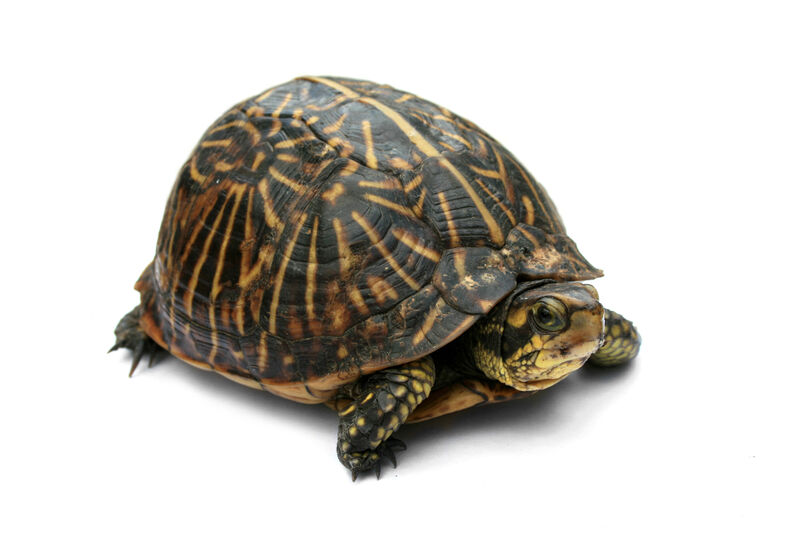
The most distinctive feature of a box turtle is the hinge on its plastron, the flat bottom part of its shell. Most turtles can pull their head and legs partway into their shells, but box turtles can go much further — they can close their shell up tight like a locked box, which is how they got their name. The hinge is made of flexible cartilage that connects the front and back sections of the plastron, allowing each half to swing upward and press firmly against the upper shell, called the carapace. When the shell is fully closed, there is almost no gap for a predator’s teeth or claws to pry open. This defense is so effective that adult box turtles have very few natural predators.
What They Look Like
Box turtles are relatively small, usually measuring between four and seven inches long. Their high, dome-shaped carapace is covered in colorful patterns of yellow, orange, or reddish markings set against a dark brown or black background. Every individual turtle has a unique pattern, almost like a fingerprint. Males often have bright red or orange eyes, while females typically have brown or yellowish eyes. There are six recognized subspecies of the Eastern box turtle alone, and each one shows slightly different colors and patterns depending on where it lives.
Where They Live
Eastern box turtles are found throughout the eastern United States, from Maine south to Florida and west to Texas and the Great Plains. They prefer deciduous forests with plenty of leaf litter, fallen logs, and moist soil where they can dig shallow resting spots called forms. One of the most surprising things about box turtles is how small their home range is — most individuals spend their entire lives within an area of just a few acres, sometimes no bigger than a couple of football fields. They learn every detail of their home territory, including where to find food, water, and shelter throughout the seasons. If a box turtle is moved to an unfamiliar location, it will often wander relentlessly trying to find its way back home, which can put it in serious danger from cars and predators.
What They Eat
Box turtles are true omnivores, meaning they eat both plants and animals. Their diet changes with the seasons and with age — young box turtles tend to eat more protein-rich animal food like earthworms, slugs, beetles, and snails, while older turtles eat more fruit, berries, and leafy greens. One of their most important ecological roles is eating wild mushrooms, including species that are poisonous to most other animals. By feasting on fungi and then moving through the forest, box turtles help spread mushroom spores to new areas, supporting the underground fungal networks that many trees depend on for nutrients. They have also been known to eat carrion, bird eggs, and even the occasional small frog.
Brumation
When temperatures drop in autumn, box turtles enter a hibernation-like state called brumation. Unlike true hibernation in mammals, brumation involves periods of deep sleep interrupted by occasional sluggish movement on warmer days. Box turtles prepare by digging into loose soil, leaf litter, or old mammal burrows, sometimes burrowing several inches below the surface to escape freezing temperatures. Their heart rate and breathing slow dramatically, and they survive on stored body fat for months without eating. In the southern parts of their range, brumation may last only a few weeks, but in northern states, box turtles can remain underground from October all the way through April.
Long Lives
Box turtles are among the longest-lived reptiles in North America, with many individuals reaching 50 years of age in the wild and some living past 100. Scientists can sometimes estimate a box turtle’s age by counting the growth rings on its scutes, the individual plates that make up the shell, though this method becomes less reliable as the rings wear smooth with age. Because box turtles grow and reproduce slowly — females typically lay only three to eight eggs per year — every adult turtle matters to the survival of its local population. It can take a box turtle 7 to 10 years to reach maturity, and during those years, young turtles face many dangers from raccoons, skunks, and other predators that dig up nests. This slow life strategy worked well for millions of years, but it makes box turtles especially vulnerable to modern threats.
Conservation
Box turtle populations are declining across much of their range due to habitat loss, road mortality, and collection for the pet trade. Because box turtles have such small home ranges, the destruction of even a single patch of forest can wipe out an entire local population. Roads are particularly deadly because turtles cross them slowly during their seasonal movements, and the loss of even a few breeding adults each year can cause a population to shrink over decades. Several states have passed laws making it illegal to collect wild box turtles, and many wildlife organizations run programs to help turtles cross busy roads safely. Scientists emphasize that the best way to help box turtles is to protect large areas of connected forest habitat and to never take a wild turtle home as a pet, since removing even one adult from the wild can have lasting effects on the local population.
 OtterKnow Kids Encyclopedia