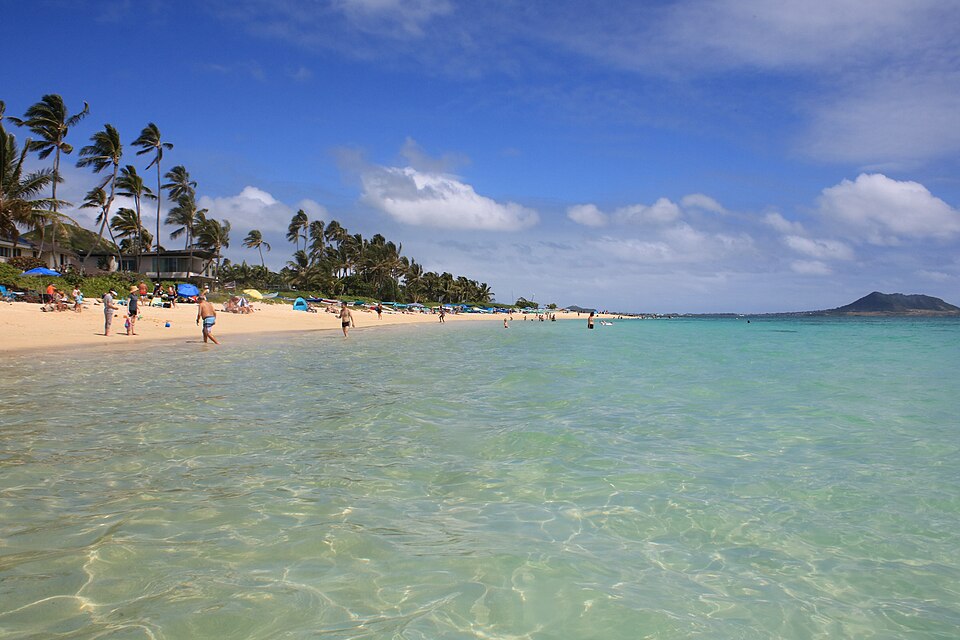
The Hawaiian Islands
The eight main Hawaiian islands are Hawaii (often called the Big Island), Maui, Oahu, Kauai, Molokai, Lanai, Niihau, and Kahoolawe. The Big Island is by far the largest, covering more area than all the other islands combined. Oahu is the most populated island and home to Honolulu, where most of the state’s residents live. Each island has its own character, from Kauai’s lush green valleys to Maui’s sweeping beaches and towering Haleakala crater. The smaller islands and atolls stretch northwest for hundreds of kilometers across the Pacific.
Volcanic Origins
Every Hawaiian island was formed by volcanic activity over a geological hotspot deep beneath the Pacific Ocean floor. As the Pacific tectonic plate slowly moves northwest, new islands form over the hotspot while older ones drift away and gradually erode. The Big Island is the youngest and most volcanically active, home to Kilauea, one of the most active volcanoes in the world. Mauna Loa, also on the Big Island, is the most massive volcano on Earth and still erupts periodically. Mauna Kea, measured from its base on the ocean floor, rises over 10,000 meters — making it taller than Mount Everest when measured from base to summit.
Native Hawaiian Culture
The native Hawaiian people, known as Kanaka Maoli, settled the islands after voyaging thousands of kilometers across the open Pacific from Polynesia sometime between 300 and 600 CE. They navigated using the stars, ocean currents, and the flight patterns of birds — an impressive feat of seamanship. Hawaiian culture is rich with traditions including hula dancing, chanting, and the giving of lei flower garlands as a sign of welcome and respect. The concept of “aloha” goes far beyond a simple greeting — it represents a way of living with love, compassion, and respect for others. Surfing, now enjoyed around the world, was invented by native Hawaiians and was once considered a sport of royalty.
Wildlife and Nature
Hawaii’s isolation in the middle of the Pacific Ocean allowed unique plants and animals to evolve that exist nowhere else on Earth. The state is home to the nene (Hawaiian goose), the Hawaiian monk seal, and thousands of species of native plants and insects. Coral reefs surrounding the islands support sea turtles, tropical fish, dolphins, and humpback whales that migrate to Hawaiian waters each winter. Unfortunately, many of Hawaii’s native species are now endangered because of habitat loss and introduced predators like rats and mongooses. Hawaii is sometimes called the “endangered species capital of the world” because so many of its unique organisms are at risk.
Pearl Harbor and World War II
One of the most significant events in Hawaiian and American history took place on December 7, 1941, when the Empire of Japan launched a surprise military attack on the Pearl Harbor naval base on Oahu. The attack destroyed or damaged numerous battleships and aircraft and killed over 2,400 Americans. President Franklin D. Roosevelt called it “a date which will live in infamy,” and the United States entered World War II the very next day. Today, the USS Arizona Memorial at Pearl Harbor honors those who lost their lives and is one of the most visited landmarks in Hawaii. The attack was a turning point that transformed both Hawaii and the entire course of the war.
Climate and Geography
Hawaii enjoys a warm tropical climate year-round, with average temperatures ranging from about 23 to 29 degrees Celsius. The islands have dramatic differences in rainfall — the windward (northeast) sides of the islands receive heavy rain, while the leeward (southwest) sides are much drier. Mount Waialeale on Kauai is one of the wettest places on Earth, receiving nearly 11 meters of rain per year. Hawaii’s landscapes include volcanic deserts, tropical rainforests, towering sea cliffs, and white, black, and even green sand beaches. The state also has the highest life expectancy of any U.S. state, which many researchers attribute to its climate, outdoor lifestyle, and diverse diet.
Economy and Tourism
Tourism is the largest part of Hawaii’s economy, with millions of visitors arriving each year to enjoy the islands’ beaches, natural beauty, and cultural experiences. Agriculture has long been important, with sugarcane and pineapple once dominating the economy, though those industries have declined significantly. Today, Hawaiian farms grow coffee (especially the prized Kona coffee), macadamia nuts, and tropical fruits. The U.S. military also has a major presence in Hawaii, with several bases across the islands providing jobs and economic activity. Hawaii’s unique position in the Pacific makes it an important hub connecting North America with Asia and the Pacific Islands.
 OtterKnow Kids Encyclopedia