Charles Darwin and the Theory of Evolution
The Galapagos Islands are famous because of a young British scientist named Charles Darwin. Darwin visited the islands in 1835 aboard the ship HMS Beagle and noticed that animals on different islands had developed slightly different features. He observed that finches on each island had beaks shaped for different kinds of food, a discovery that helped him develop his theory of evolution by natural selection. Darwin published his groundbreaking ideas in the book “On the Origin of Species” in 1859. The finches he studied are now known as Darwin’s finches and remain one of the best examples of how species adapt to their environments.
Animals Found Nowhere Else
The Galapagos Islands are home to many species that exist nowhere else on the planet. Galapagos giant tortoises are the most iconic residents and can live for more than 100 years. Marine iguanas are the only lizards in the world that swim in the ocean to feed on algae. The flightless cormorant has lost the ability to fly because it had no natural predators on the islands and adapted to diving for food instead. Galapagos penguins are the only penguin species found north of the equator. These animals evolved in isolation over millions of years, which is why they are so different from species on the mainland.
Protecting the Park
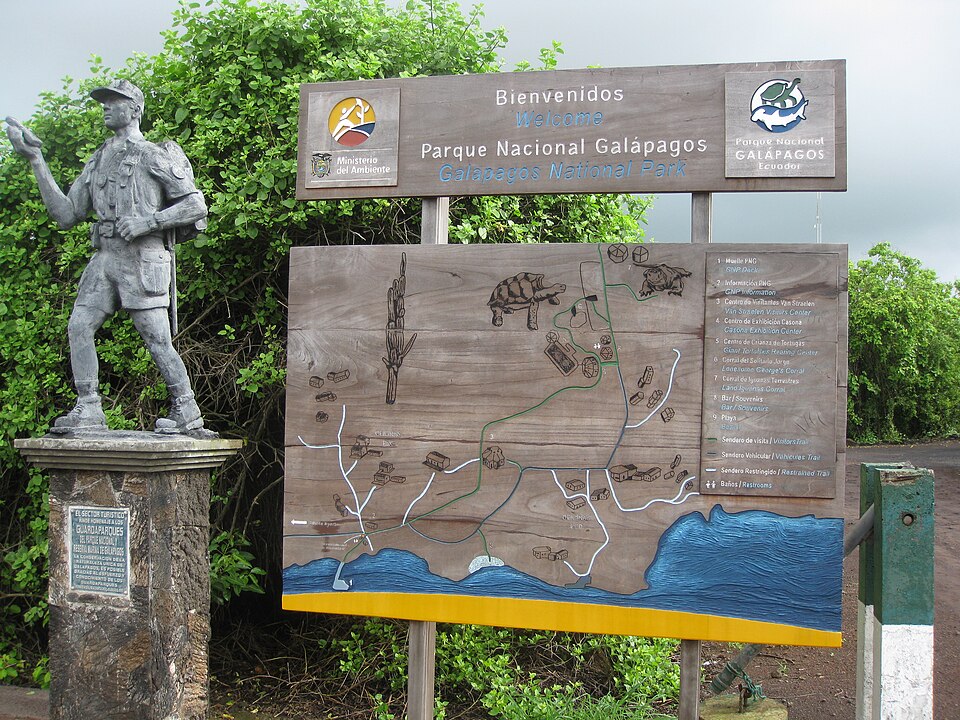
The Galapagos National Park has some of the strictest visitor rules of any park in the world. Tourists must be accompanied by certified naturalist guides at all times, stay on marked trails, and keep a safe distance from all animals. About 275,000 tourists visit the park each year under carefully managed conditions. The park’s marine reserve, established in 1998, covers 133,000 square kilometers of surrounding ocean, making it one of the largest marine protected areas in the world. These rules help make sure that human visitors do not disturb the fragile ecosystems.
The Fight Against Invasive Species
One of the biggest threats to the Galapagos is invasive species brought to the islands by humans. Goats, rats, cats, and pigs have caused enormous damage by eating native plants, preying on bird eggs, and competing with native animals for food. Park scientists have led major campaigns to remove these invasive species from the islands, including a successful effort to eliminate goats from several large islands. Removing invasive animals has allowed native plants and animals to recover in many areas. The battle against invasive species is ongoing and requires constant effort and funding.
Lonesome George and Conservation
One of the most famous stories from the Galapagos is the tale of Lonesome George, the last known Pinta Island tortoise. George was discovered in 1971, and scientists spent decades trying to find him a mate from a closely related subspecies. Despite their efforts, George never produced offspring, and when he died in 2012, his subspecies went extinct. Lonesome George became a powerful symbol of extinction and the importance of conservation around the world. His story reminds us that once a species is gone, it can never come back.
Why the Galapagos Matter
The Galapagos Islands are often called a “living laboratory” because scientists can study evolution and ecology in action. Researchers from around the world visit the islands to observe how species adapt, compete, and survive. The park also shows that conservation and tourism can work together when managed responsibly. Lessons learned in the Galapagos have influenced how countries protect wildlife and natural areas everywhere. The islands continue to inspire people to care about the natural world and the species we share it with.
 OtterKnow Kids Encyclopedia