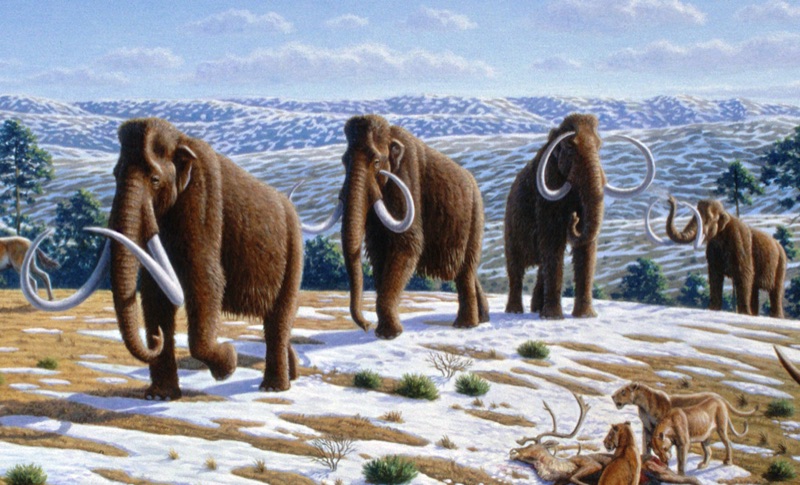
What It Looked Like
A fully grown woolly mammoth stood about 9 to 11 feet tall at the shoulder, roughly the same size as a modern African elephant. Despite being similar in height, woolly mammoths had a distinctive high, domed skull and a sloping back that made them look quite different from the elephants we see today. Their ears were much smaller than those of modern elephants, which helped prevent heat loss in frigid temperatures. Woolly mammoths also had shorter tails for the same reason, since less exposed skin meant less body heat escaping into the cold air. Their bodies were stocky and powerful, built for surviving in some of the harshest climates on the planet.
Tusks
One of the woolly mammoth’s most striking features was its enormous curved tusks, which could grow up to 15 feet long. Unlike the straighter tusks of modern elephants, mammoth tusks curved dramatically, sometimes even crossing over each other in older animals. Both males and females had tusks, though the males’ tended to be larger. Scientists believe mammoths used their tusks to sweep snow off the ground to reach grass and plants underneath, to defend themselves from predators like the saber-toothed tiger, and to compete with other mammoths during mating season. Much like the rings inside a tree trunk, the layers within a mammoth tusk can tell researchers about the animal’s age, health, and even the seasons it experienced throughout its life.
Staying Warm
Living through ice ages required some serious cold-weather gear, and the woolly mammoth was perfectly equipped. Its body was covered in two layers of fur: a dense, woolly undercoat close to the skin and longer, coarser guard hairs on top that could reach over three feet in length. Beneath the skin, a thick layer of fat up to three inches deep provided extra insulation, much like the blubber on a whale. The mammoth’s small ears and short tail reduced the amount of skin exposed to freezing winds, and even the bottoms of its feet had tough pads that helped grip ice and snow. All of these adaptations together made the woolly mammoth one of the best-insulated land animals that has ever existed.
Where It Lived
Woolly mammoths were widespread across the Northern Hemisphere, living on the vast, treeless grasslands known as the mammoth steppe. This enormous habitat stretched from present-day Spain all the way across Europe and Asia to the eastern tip of Siberia, and even into North America through a land bridge that once connected Russia and Alaska. During the ice ages, so much ocean water was locked up in glaciers that sea levels dropped, exposing this land bridge called Beringia. Mammoths thrived in these cold, dry grasslands where grasses and small shrubs grew in abundance. As the climate shifted over thousands of years, mammoth populations moved with the changing landscape, always following the food and conditions they needed to survive.
What It Ate
Woolly mammoths were herbivores, meaning they ate only plants, and they needed a lot of them to fuel their massive bodies. Scientists estimate that an adult mammoth ate around 400 pounds of vegetation every single day. Their diet consisted mainly of grasses, sedges, and small flowering plants that grew on the steppe, along with occasional tree bark and shrubs. Researchers know what mammoths ate because the contents of their stomachs have been found perfectly preserved inside frozen specimens, giving us a direct window into their last meals. Their large, ridged teeth were specially designed for grinding tough, fibrous plant material, and a mammoth could go through six sets of teeth in its lifetime as each set wore down from constant chewing.
Extinction
The woolly mammoth’s disappearance is one of the great mysteries of prehistory, and most scientists believe it was caused by a combination of factors. As the last ice age ended around 10,000 years ago, the climate warmed rapidly, and the vast grasslands that mammoths depended on shrank and were replaced by forests and wetlands. At the same time, human hunters were spreading across the mammoth’s range, armed with spears and working in coordinated groups to bring down these enormous animals. The combination of a shrinking habitat and increasing hunting pressure was likely too much for mammoth populations to withstand. A small group of woolly mammoths survived on Wrangel Island, a remote spot in the Arctic Ocean north of Siberia, until about 4,000 years ago, meaning they were still alive when the ancient Egyptians were building the pyramids.
Frozen in Time
One of the most surprising things about woolly mammoths is how well some specimens have been preserved in the frozen ground of Siberia and other Arctic regions. Permafrost, the layer of soil that stays frozen year-round, has acted like a giant natural freezer, keeping mammoth remains intact for tens of thousands of years. Scientists have discovered frozen mammoths with their skin, fur, muscles, and even stomach contents still preserved, providing an incredible amount of information about how these animals lived. In some cases, the DNA inside these frozen specimens is so well preserved that researchers have been able to read the mammoth’s complete genetic code. This well-preserved DNA has even sparked serious scientific efforts to bring the woolly mammoth back from extinction using advanced genetic technology, though such a project would raise many complex questions about science, nature, and our responsibility to the ecosystems of today.
 OtterKnow Kids Encyclopedia